


In this episode of the Safe House Initiative Podcast, host Jeff Edwards welcomes Nick Vandenbrekel, electrical engineer, entrepreneur, and CEO of NFluxion and FTG Energy, to explore the growing vulnerabilities of our electrical infrastructure and why the future of energy may depend on decentralization.
With more than 40 years of experience in electrical engineering and energy systems, Nick explains why our aging electrical grid is struggling to keep pace with modern demands—particularly the explosive growth of artificial intelligence and data centers.
Mikaela Myers, Co-Founder and CEO of Navi Solutions and former AWS Responsible AI product manager shares a practical approach to AI adoption for small and midsize businesses. Mikaela breaks down Responsible AI in plain English, including security, privacy, fairness, safety, governance and transparency. Stop asking what you can do with AI. Start asking what problem in your business is worth solving!
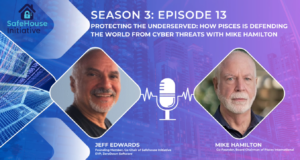
What happens when rural hospitals, public utilities, schools, and small governments become targets of cyberattacks but lack the resources to defend themselves?
In this episode of The SafeHouse Podcast, Jeff Edwards welcomes Mike Hamilton, former Seattle CISO and CTO of PISCES International, a nonprofit organization delivering free cybersecurity monitoring and real-world workforce training to underserved communities across the United States.
This conversation is based on a real-world, three-part series designed for everyday people who suddenly find themselves dealing with a hacked account, fraud, or a suspicious alert.

In this SafeHouse episode, Jeff Edwards and Alan Gin break down what actually happens when a cyber incident hits and what you should do next.
This conversation is based on a real-world, three-part series designed for everyday people who suddenly find themselves dealing with a hacked account, fraud, or a suspicious alert.
If you’ve ever wondered what you would actually do in that moment, this episode walks you through it step by step.

Kurt Suhs, Founder and CEO of Concierge Cyber, unpacks why cyber insurance adoption remains low and what businesses are actually doing instead.
Learn how businesses think about risk when they don’t have coverage and why complexity and policy structure are major barriers.

Cyber risk management is often framed as a choice between prevention and insurance. In reality, the most resilient organizations combine both.
In this episode of The SafeHouse, Jeff Edwards speaks with Michael Phillips, Global Head of Cyber at Coalition, about how insurers evaluate cyber risk and why mitigation and insurance must work together.
Building on a previous discussion about the elements of risk management, the conversation explores how underwriters think about cyber exposure, what signals insurers look for when assessing organizations, and why operational resilience is becoming central to modern cyber insurance.
The result is a practical discussion about how businesses should approach cyber risk today.